By clicking “Accept All Cookies”, you agree to the storing of cookies on your device to enhance site navigation, analyze site usage, and assist in our marketing efforts. View our Privacy Policy for more information.

Anthony, a voracious reader, often finds himself swapping book recommendations with his friends. They all know that only great readers can be great leaders. But why shouldn’t you get in on the action too? So here are just a few of Anthony’s recent favorite reads. While they cover various topics, they all take the reader behind closed doors to learn the real secrets of success in every aspect of life.

By
Robert Greene
The 48 Laws of Power is a self-help book drawing from the philosophies of Machiavelli, Sun Tzu, Carl Von Clausewitz, as well as figures ranging from Henry Kissinger to P.T. Barnum. Author Robert Greene describes various types of laws throughout the book, but with the commonality of gaining and maintaining power and domination.
This book is for people who want to gain more power, acquire a compilation of tactics, avoid mistakes and obtain a better understanding of why things turn out the way they do. It will help you understand how to practice new skills, avoid being manipulated, and master your emotions.
Robert Greene is an American author who has written six international best sellers. He was born in May 1959 and his notable works are the 48 Laws of Power, The Art of Seduction, and the 33 Strategies of War. He was featured in the New York Times, USA Today, CNN, The New Yorker, Newsweek, The Los Angeles Times, Forbes, Huffington Post, Business Week, Business Insider, Fast Company, Slate, and XXL.

By
Peter Bevelin
Peter Bevelin's study on attaining wisdom led to the creation of Seeking Wisdom. His search for this knowledge was partly inspired by his own mistakes as well as observing other’s mistakes. A big portion of the inspiration for this book is centered around the philosophy of Warren Buffet and of super-investor and Berkshire Hathaway Vice Chairman CharlesMunger. In addition to these two, Bevelin cites a wide range of thinkers such as Mark Twain, 16th Century French essayist Michel de Montaigne, Albert Einstein, Richard Feynman, and many more. He uses the ideas and research of these people in order to learn what influences our thoughts, how we can improve our thinking, as well ask asking: Why do we behave like we do? What do we want out of life? What interferes with our goals?
This book is for those who love the constant search for knowledge and are looking to understand themselves and others better. Bevelin will help the reader discover how and why we make decisions, whether that be good or bad, and what we can do to improve our thought process.
Peter Bevelin is the author of four books: A Few Lessons for Investors and Managers: from Warren E. Buffett, A Few Lessons from Sherlock Holmes, All I Want To Know Is Where I'm Going To Die So I'll Never Go There, and Seeking Wisdom From Darwin to Munger.

By
James Lee McDonough
Author James Lee McDonough offers a new perspective on William Tecumseh Sherman, a General during who fought in some of the Civil War’s most decisive campaigns such as Vicksburg, Atlanta, and Shiloh. Sherman cemented his reputation as a ruthless leader because of his role in the burning of Atlanta in 1864. Yet, McDonough reveals a man haunted by fears that history will pass him by and that he will miss his chance to serve his country. McDonough delves into Sherman's dramatic personal life, including his personal debts, the death of his young son and his strained relationship with his wife, based on years of research. The result is an extraordinary, illuminating portrait of an American icon.
This book is for anyone who wants to know more about William Sherman, and dive deeper into the many myths that have shaped our understanding of this complex military leader.
James Lee McDonough is a historian, author, and co-author of 9 books, many of which are about the Civil War. McDonough grew up in Nashville, TN and he is now a professor emeritus at Auburn University.

By
Charlie Munger
Poor Charlie’s Almanack is a collection of Charlie Munger’s lectures, talks and public commentary, compiled by Peter D. Kaufman with the support of both Charlie Munger and long-time business partner and friend Warren Buffet. Throughout the book you’ll discover Charlie Munger's distinct sense of humor, wit, and insight into the worlds of business, investing, and life itself.
This book is for those who want to dive deeper into one of the most successful investors in history’s brain and fully understand his way of thinking. It is for anyone who wants to get the most out of their life, improve decision making and problem solving as well as gain perspective on Charlie’s investment philosophy.
Charlie Munger is a billionaire investor, former real-estate attorney and businessman, right hand man to Warren Buffet and Vice Chairman of Berkshire Hathaway. Munger is also chairman of the Daily Journal Corporation and Director of Costco Wholesale Corporation.

By
Andrew Kirtzman
Hailed as “America’s Mayor” after 9/11, Rudy Giuliani was brilliant and accomplished, but complicated. He conflated politics with morality, and his need for power led him to make a series of disastrous decisions. Andrew Kirtzman, who was with Giuliani on the morning of September 11th conducted hundreds of interviews to write this new biography, which paints a picture of what really happened to Rudy.
This book is for those who want to take a deeper look into the polarizing figure that is Rudolph Giuliani; to see where it all began, and how it came crashing down.
Andrew Kirtzman has covered Rudy Giuliani for three decades as an award-winning political reporter for print and television. He began as a City Hall reporter and then wrote Rudy Giuliani: Emperor of the City, which is considered a definitive book about Giuliani’s mayoralty.
By
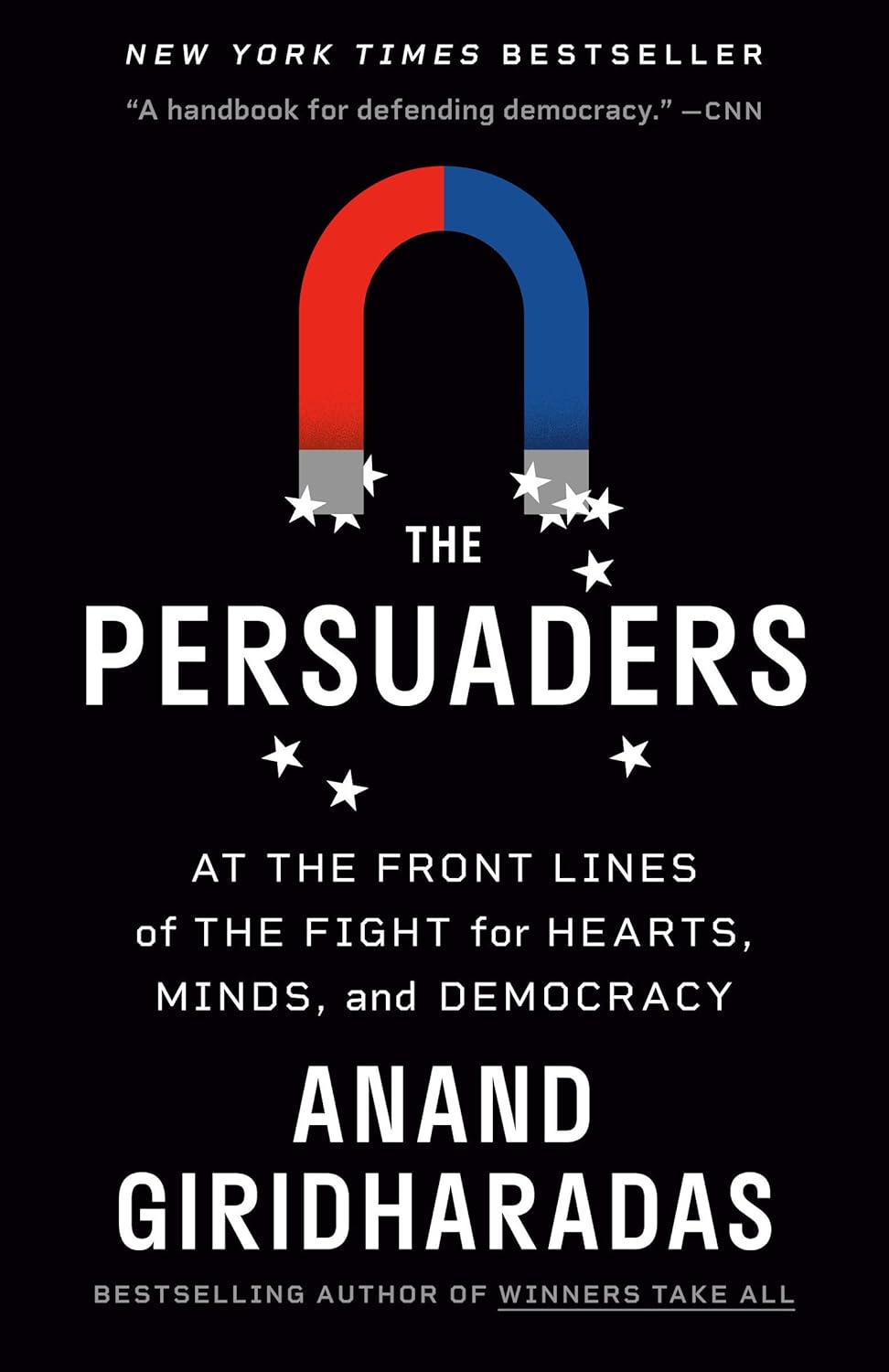
Anand Giridharadas
From well-known political activists like Alexandria Ocasio-Cortez and Bernie Sanders to local leaders and disinformation fighters, The Persuaders is an inside account of why America is suffering from a crisis of faith in persuasion. Giridharadas discusses how this is putting US democracy at risk, and what steps we can take to unite and heal our country.
This book is for anyone who wants to become a better persuader and learn the ways in which we can get real progressive change in America.
Anand Giridharadas is the author of four books including the international bestseller Winners Take All. A former foreign correspondent and columnist for The New York Times for more than a decade, he is also an on-air political analyst for MSNBC.

By
Carole Radziwill
What Remains is a stunning, tragic memoir about a girl from a working-class town who becomes an award-winning television producer and marries Anthony Radziwill, a prince and nephew of Jackie Kennedy.
Most people will be familiar with the characters and events detailed in Radziwill’s memoir, but this book is really for anyone who wants to get to the essence of what really matters in life, considering love, loss, pain, and fortune.
Carole Radziwill worked as an award-winning journalist with ABC News for fifteen years. She is the author of the New York Times bestseller What Remains, the novel A Widow's Guide to Sex and Dating, and she stars on the Bravo reality show The Real Housewives of New York.
By
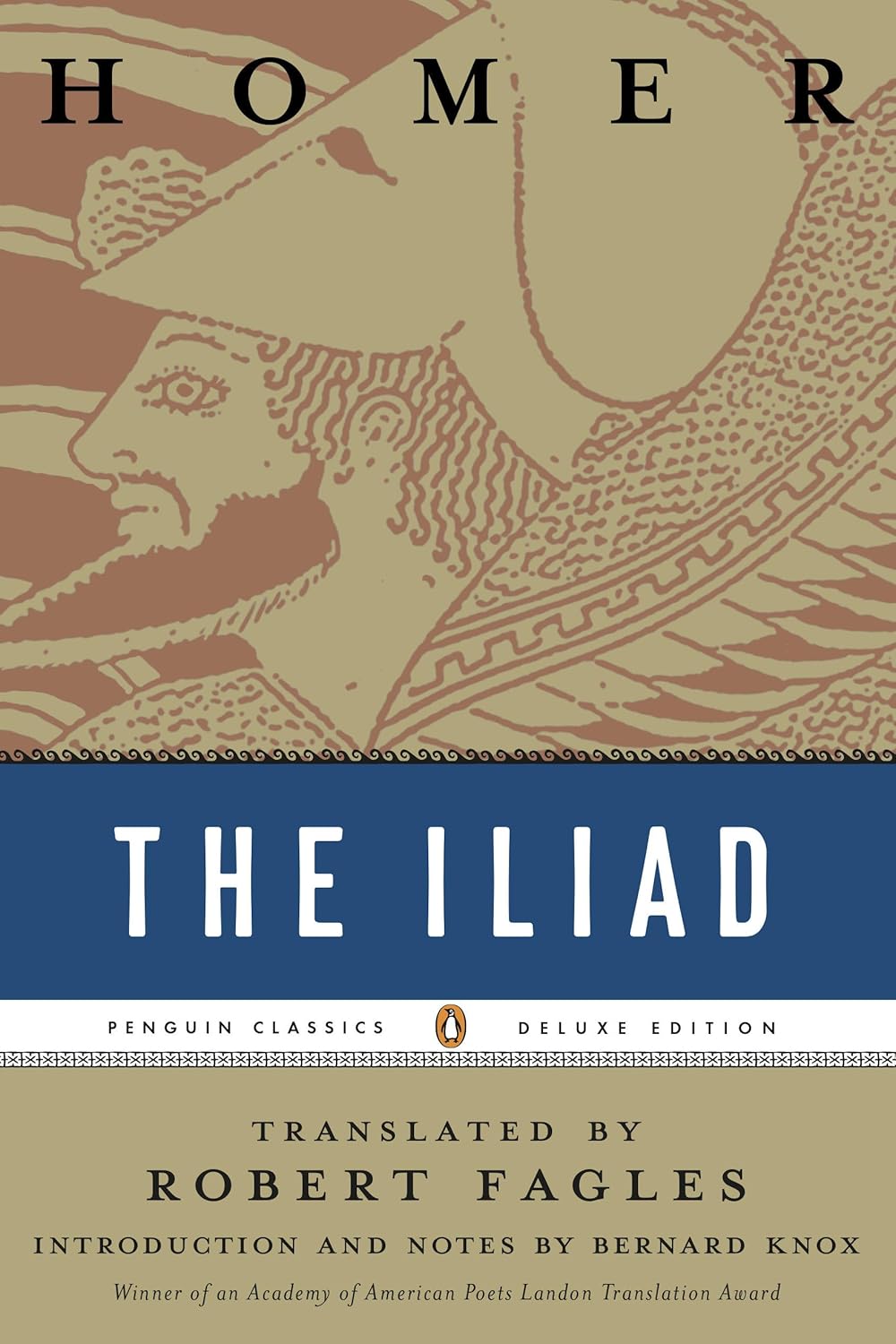
Homer
Homer's The Iliad, an ancient Greek epic poem from the ninth century B.C. The work depicts the Trojan War with vivid portrayals of both the horror and heroism of warriors and gods experiencing intense emotions while battling amidst devastation.
This book is for anyone interested in understanding Western literature and human nature. It's foundational reading, everything emanates from The Iliad, and all of Western literature comes out of the plotline of The Iliad. This isvaluable for people in positions of power, and I would have benefitted from reading it before going into the White House.
Homer was probably born around 725BC on the Coast of Asia Minor, now the coast of Turkey, but then really a part of Greece. Homer was the first Greek writer whose work survives. He was one of a long line of bards, or poets, who worked in the oral tradition. Homer and other bards of the time could recite, or chant, long epic poems.

By
Dale Carnegie
Lincoln: The Unknown by Dale Carnegie is a detailed biography originally published in 1932 that explores Abraham Lincoln's life comprehensively—covering the good, the bad, and the ugly. The book focuses on the moral dilemmas Lincoln faced during his lifetime. It's a well-researched, accessible work that humanizes Lincoln beyond the mythology surrounding him.
This book is intended for readers who want to understand freedom, liberty, and great leadership—especially during troubled times. It's positioned as particularly relevant for contemporary readers given current political polarization in the United States. I strongly recommend it for anyone seeking deeper insight into what exemplary leadership looks like.
Dale Carnegie described himself as a "simple country boy" from Missouri but was also a pioneer of the self-improvement genre. Since the 1936 publication of his first book, How to Win Friends and Influence People, he has touched millions of readers and his classic works continue to impact lives to this day.

By
Zachary D.Carter
The Price of Peace is the story of how one man's brilliant mind shaped the modern world. It's about Keynes' journey from obscurity to becoming the most consequential economist and thinker of his generation. The book captures his extraordinary life—from glittering Bloomsbury parties to the high-stakes negotiations that determined the fate of nations. It explores how his ideas became revolutionary, how they were fought over, and how some were lost to history. Ultimately, it's about democracy, money, and what constitutes the good life.
This is for anyone who wants to understand modern economics, politics, and power. It's for people interested in how ideas shape history and how one brilliant mind can influence the trajectory of nations. If you care about inequality, democracy, and the forces that shape our world order—this book is essential reading. It's also for those who appreciate biography done right—compelling, smart, and historically significant.
Zachary D. Carter is the author of The Price of Peace: Money, Democracy and the Life of John Maynard Keynes. Selected by The New York Times, The Economist, Publishers Weekly, Bloomberg, Mother Jones, TechCrunch and others as one of the best books of 2020. The Price of Peace has been longlisted for the Cundill History Prize and shortlisted for the SABEW Best in Business Award. Zachary is a senior reporter at HuffPost, where he covers Congress, the White House, and economic policy. His written work has appeared in The Wall Street Journal, The Washington Post, The New Republic, The Nation, and The American Prospect, among other outlets.
By
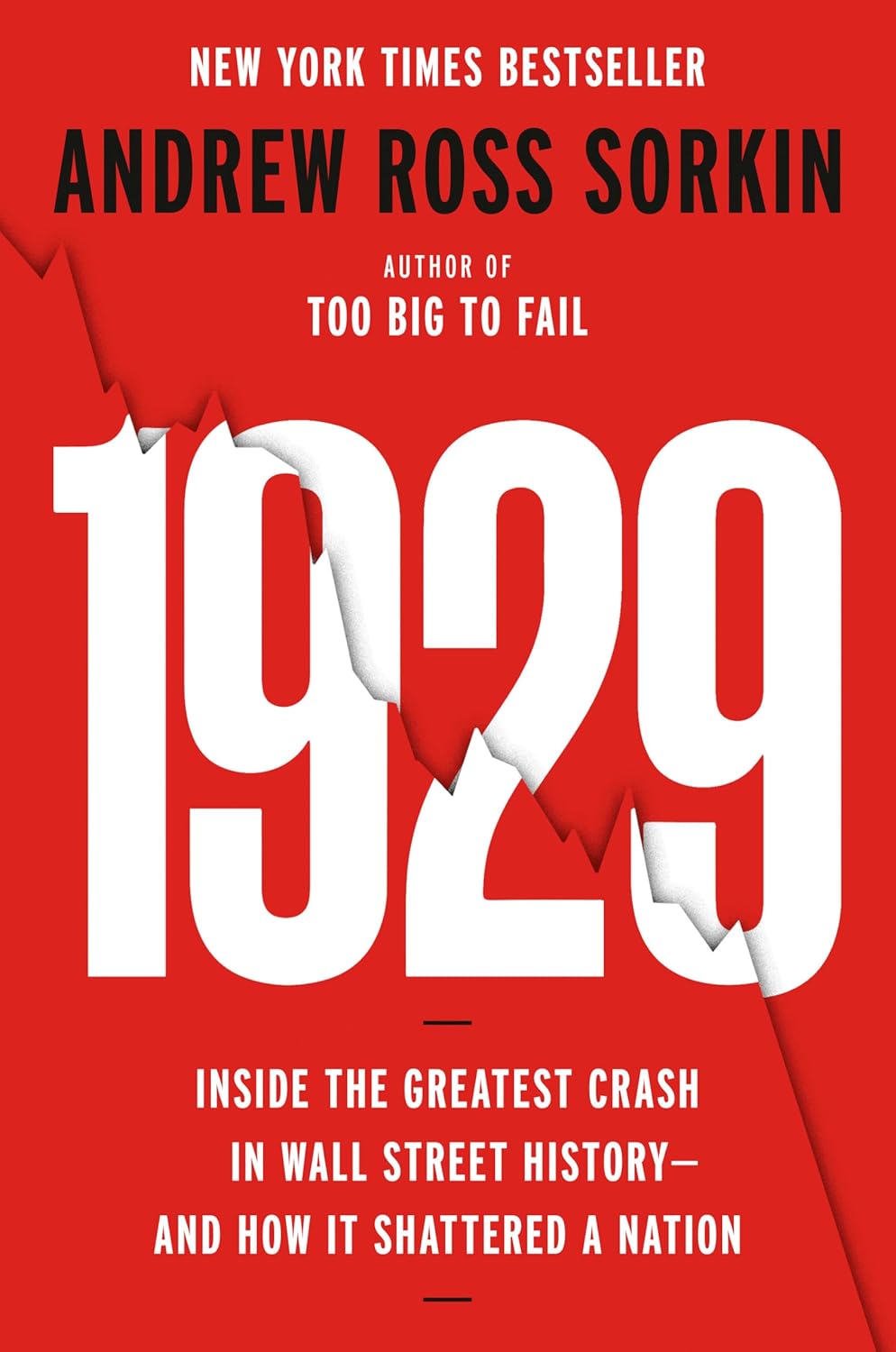
Andrew Ross Sorkin
1929: The Inside Story of the Greatest Crash in Wall Street History is a narrative-driven account of the stock market collapse that shattered the American economy and triggered the Great Depression. Rather than treating 1929 as a single event, Sorkin presents it as a complex story unfolding over months, involving excessive debt, speculative frenzy, and lack of transparency. He puts readers "in the room" with key players, including President Hoover, Treasury Secretary Andrew Mellon, and Federal Reserve officials, showing how their policy mistakes—raising taxes, implementing tariffs, and refusing to inject liquidity—made the crisis far worse. The book also explores the moral and legal gray areas of Wall Street behavior and explains how the crisis ultimately led to institutional reforms and the creation of the social safety net under FDR. Watch my conversation with Andrew on Open Book.
Anyone interested in understanding financial markets, economic policy, and history. This is essential reading for investors, policymakers, and those who want to understand the parallels between 1929 and 2008, or between past and present market risks. It's also for readers who appreciate compelling narrative non-fiction that brings historical events to life through vivid storytelling and character development.
Andrew Ross Sorkin is an award-winning journalist for The New York Times and a co-anchor of Squawk Box, CNBC’s signature morning program. He is also the founder and editor at large of DealBook, an online daily financial report published by The New York Times that he started in 2001. Sorkin is the bestselling author of Too Big to Fail and the co-producer of the 2011 film adaptation, which was nominated for eleven Emmy Awards. Sorkin is also the co-creator of the drama series Billions on Showtime.
By
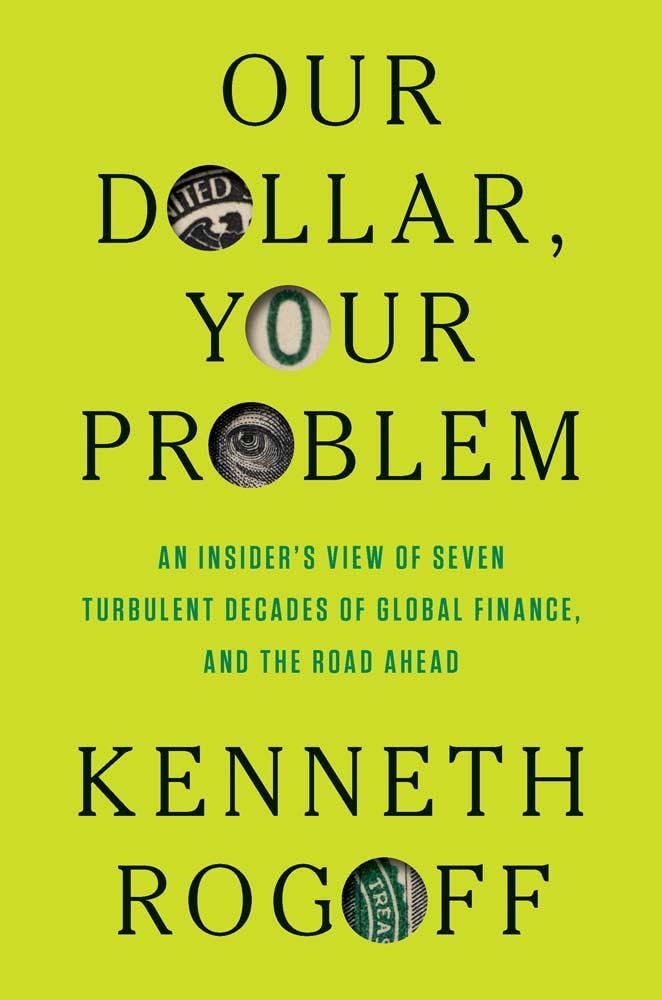
Kenneth Rogoff
Our Dollar, Your Problem is an insider's examination of how the US dollar became the world's reserve currency and the dominant instrument of American geopolitical power—and how current policies are threatening that position. Rogoff traces seven decades of global finance, showing how the US has leveraged its monetary flexibility to solve domestic problems, often at the expense of the rest of the world. The title comes from a famous quote by former Treasury Secretary John Connally: "The dollar is our currency, but your problem." The book argues that independent central banks are a relatively new phenomenon that politicians on both sides of the aisle resent and increasingly attack. Rogoff warns that quantitative easing, low interest rates, massive debt accumulation, and undermining Fed independence are taking the dollar's dominance for granted and that future US policy decisions around trade wars and fiscal management will result in the dollar being "knocked down a couple notches"—still the world's primary currency, but with significantly reduced market share and global influence. Watch my conversation with Kenneth on Open Book here.
This book is essential reading for investors, policymakers, finance professionals, and anyone concerned about the future of the global financial system and US economic power. It's particularly valuable for those who manage portfolios and need to understand macro-level currency and geopolitical risks. It's also for readers who appreciate rigorous economic analysis written in accessible, engaging prose. Anyone interested in understanding how central bank independence affects markets, how inflation impacts working people, and where the world's reserve currency is headed should read this book.
Kenneth Rogoff is Maurits C. Boas Professor of Economics at Harvard University and former International Monetary Fund chief economist. One of the world’s foremost observers on the global economy, he is coauthor of the New York Times bestselling This Time Is Different.
By
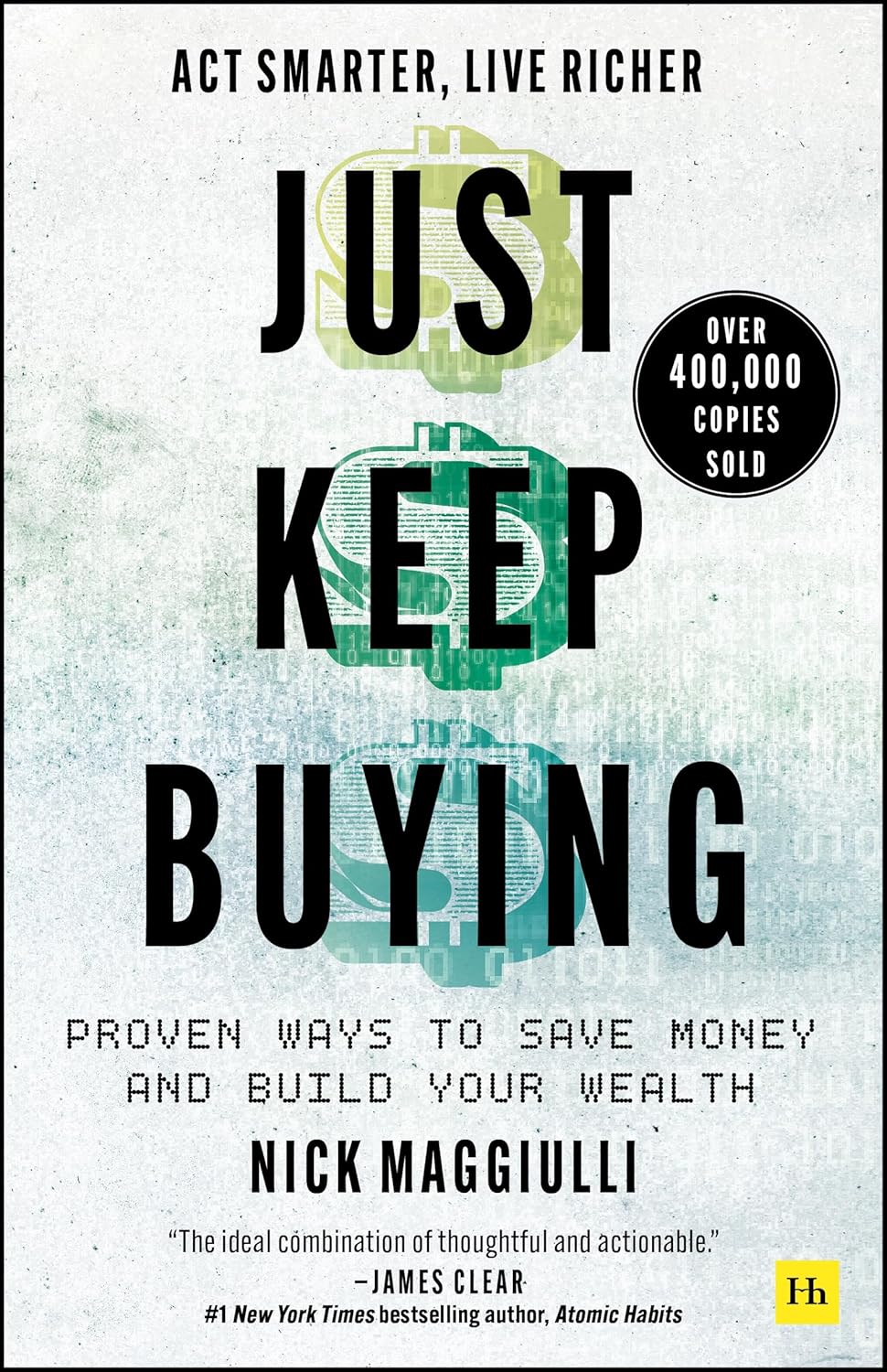
Nick Maggiulli
Just Keep Buying is a practical guide grounded in data and research that cuts through the noise of conventional financial wisdom. Maggiulli leverages his popular blog's insights to answer fundamental questions about personal finance with hard evidence rather than guesswork. The core message is simple but powerful: stop trying to outsmart the market, stop overthinking your savings strategy, and focus on what actually works according to the data. The book provides concrete, actionable strategies you can use immediately to improve your financial life and accelerate wealth building.
This book is for anyone who wants to make smarter financial decisions without the sales pitch or industry-driven narratives. It's perfect for people frustrated with contradictory financial advice, young professionals starting their wealth-building journey, investors tired of market timing anxiety, and anyone seeking evidence-based answers to real money questions. It's especially valuable for those who appreciate data and want to understand the "why" behind financial strategies rather than just following rules of thumb.
Nick Maggiulli is the chief operating officer and data scientist at Ritholtz Wealth Management, where he oversees operations across the firm and provides insights on business intelligence. He is the author of two books, Just Keep Buying and The Wealth Ladder, and Of Dollars and Data, a blog focused on the intersection of data and personal finance. His work has been featured in The Wall Street Journal, CNBC, and the Los Angeles Times.
By
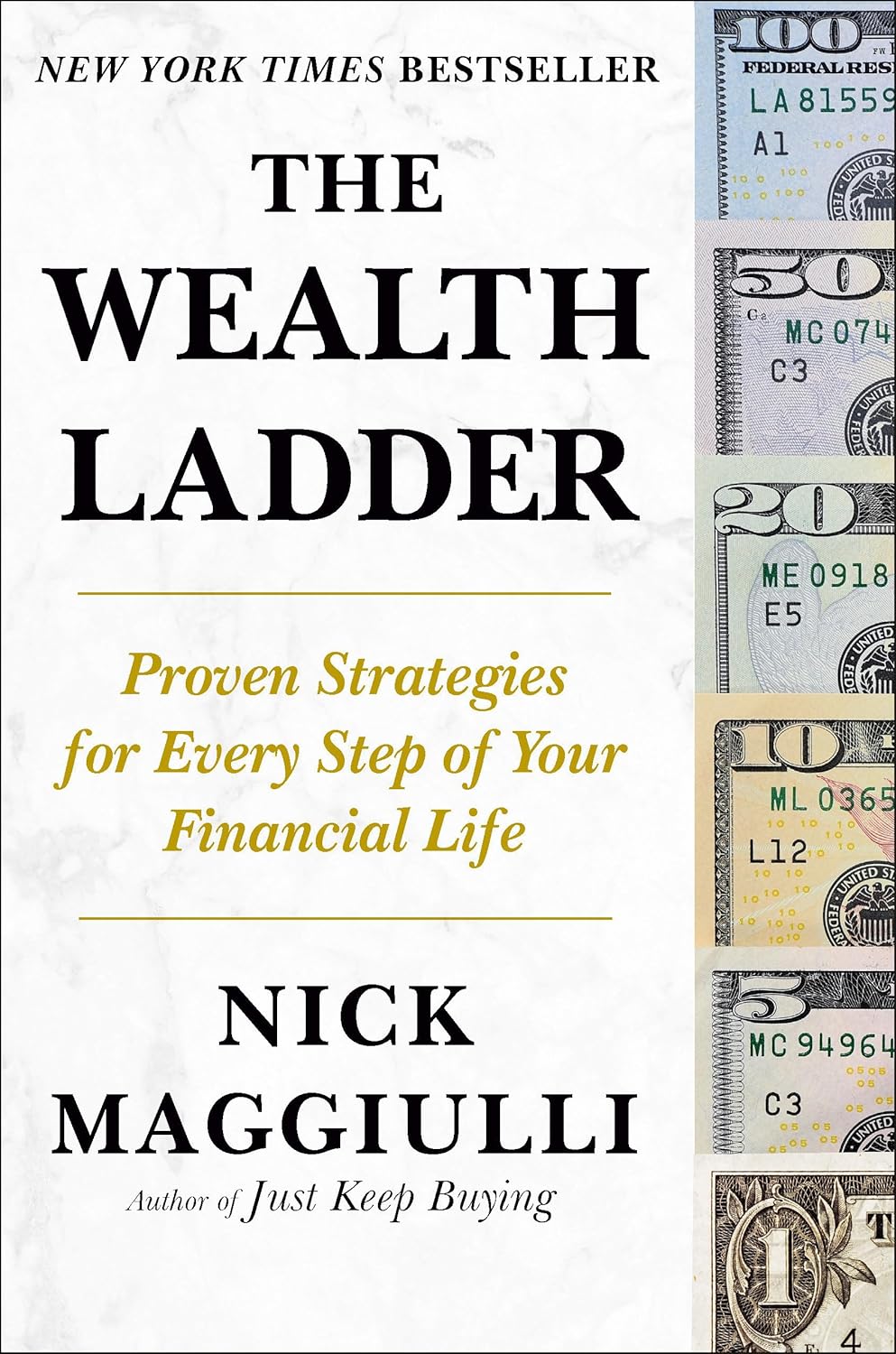
Nick Maggiulli
The Wealth Ladder is a paradigm shift in how we think about personal finance. Rather than offering generic advice applicable to everyone, Maggiulli's six-level framework acknowledges that your financial priorities, challenges, and strategies must evolve as you progress. Each level demands a different approach—from basic cash flow management at the lower levels to tax optimization and wealth preservation at the higher levels. The book provides specific guidance on what to focus on at each stage, eliminating the guesswork about where to direct your financial energy next. It's about applying the right strategy at the right time, not just grinding harder forever. Watch my converation with Nick on Open Book.
This book is for anyone feeling stuck despite their effort—people who are working hard and cutting expenses but not seeing progress. It's valuable for those at any stage of wealth building, from someone just starting out managing their first paycheck to someone with substantial assets trying to optimize their financial life. It's perfect for readers who recognize that their financial needs and strategies have changed over time and want a framework to guide their next moves. It's also ideal for those seeking clarity on what to prioritize financially at their current stage, rather than being overwhelmed trying to do everything at once.
Nick Maggiulli is the chief operating officer and data scientist at Ritholtz Wealth Management, where he oversees operations across the firm and provides insights on business intelligence. He is also the author of Just Keep Buying, his first book, and Of Dollars and Data, a blog focused on the intersection of data and personal finance. His work has been featured in The Wall Street Journal, CNBC, and the Los Angeles Times.
By
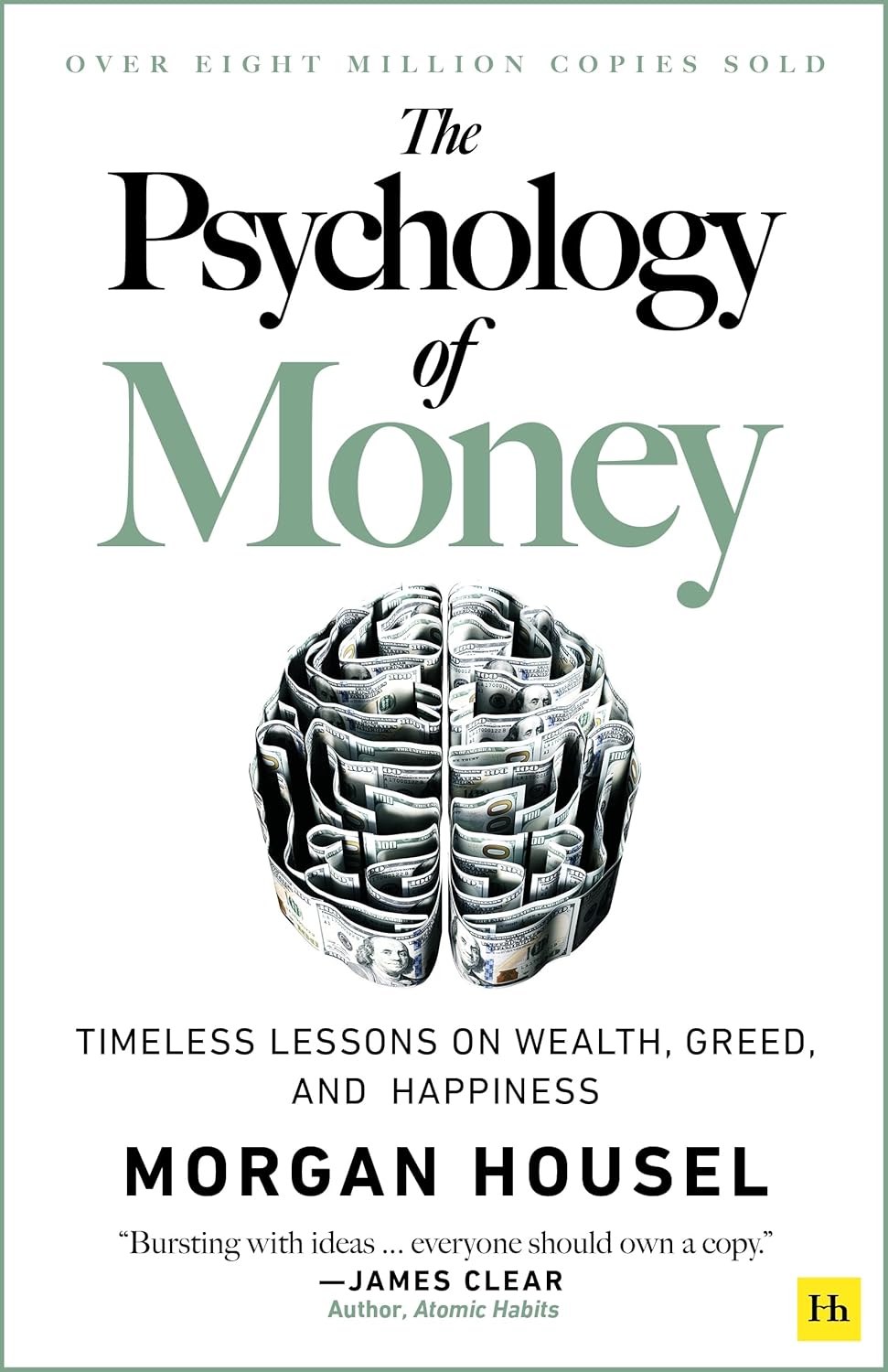
Morgan Housel
The Psychology of Money reframes personal finance, investing, and business decisions as human behavior problems rather than math problems. Housel uses 19 interconnected stories to explore themes like luck versus skill, the power of humility in investing, the danger of comparing yourself to others, and how your relationship with money shapes your life. Each story illuminates a different psychological principle that influences financial decision-making—from the boardroom to the dinner table. The book doesn't prescribe what to do; instead, it helps you understand why people (including yourself) make the financial choices they do, enabling you to recognize biases, avoid predictable mistakes, and build a healthier relationship with money. Watch my conversation with Morgan on Open Book.
This book is for anyone interested in personal finance, investing, or business—particularly those frustrated that knowing "the right thing to do" financially doesn't translate into actually doing it. It's valuable for investors tired of following strategies that look good on paper but feel wrong in practice. It's perfect for people who recognize that their financial decisions are driven by emotion and psychology rather than pure logic, and who want to understand those patterns. It's also ideal for those seeking a more human, compassionate approach to money rather than prescriptive rules. Anyone who wants to understand themselves and others better through the lens of financial behavior will find this essential reading.
Morgan Housel is a partner at The Collaborative Fund. He is a two-time winner of the Best in Business Award from the Society of American Business Editors and Writers, winner of the New York Times Sidney Award, and a two-time finalist for the Gerald Loeb Award for Distinguished Business and Financial Journalism.
By
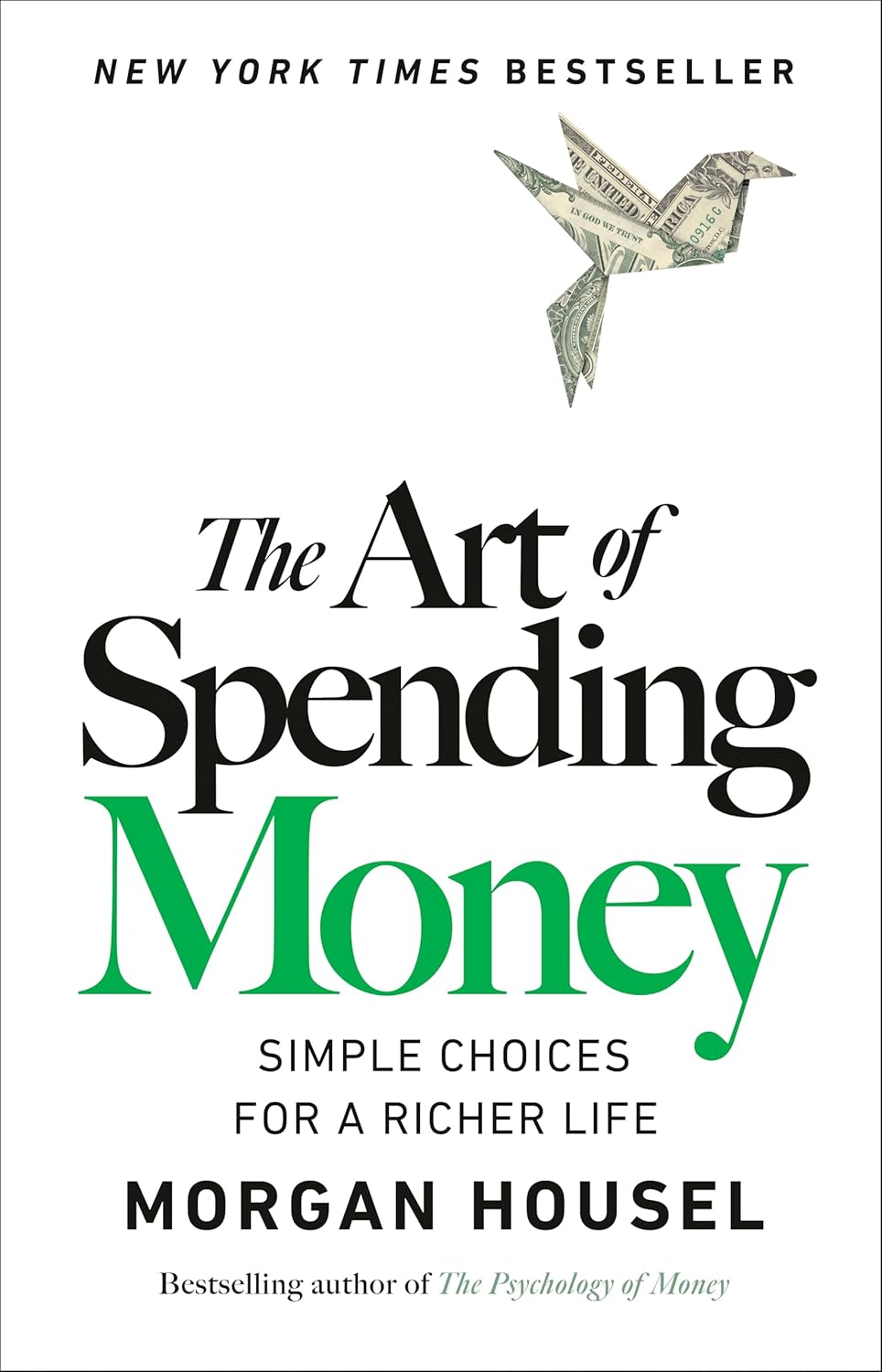
Morgan Housel
The Art of Spending Money is a masterclass in intentional spending grounded in self-awareness rather than rules. Housel demonstrates that expectations matter far more than income when it comes to financial satisfaction, and that the most valuable purchases are those that genuinely improve your life and bring peace of mind. The book doesn't tell you what to spend on; instead, it helps you understand why you spend the way you do—the psychological patterns, insecurities, and desires driving your choices—so you can make decisions aligned with what actually matters to you. It's about learning to want what's worth wanting and getting the most value from what you already have, not about chasing wealth or status. Watch my conversation with Morgan on Open Book.
This book is for anyone who feels conflicted about spending—those who either spend compulsively on things that don't satisfy them or refuse to spend on things that would genuinely improve their quality of life. It's perfect for people who've achieved financial success but don't feel wealthy or content. It's valuable for those interested in the psychology of money and want to build a healthier relationship with spending. It's also ideal for anyone seeking a more intentional, values-based approach to consumption rather than following conventional wisdom. If you want to understand yourself better and learn to spend in ways that create genuine fulfillment rather than empty status-seeking, this book is essential.
Morgan Housel is a partner at The Collaborative Fund. He is a two-time winner of the Best in Business Award from the Society of American Business Editors and Writers, winner of the New York Times Sidney Award, and a two-time finalist for the Gerald Loeb Award for Distinguished Business and Financial Journalism.
By
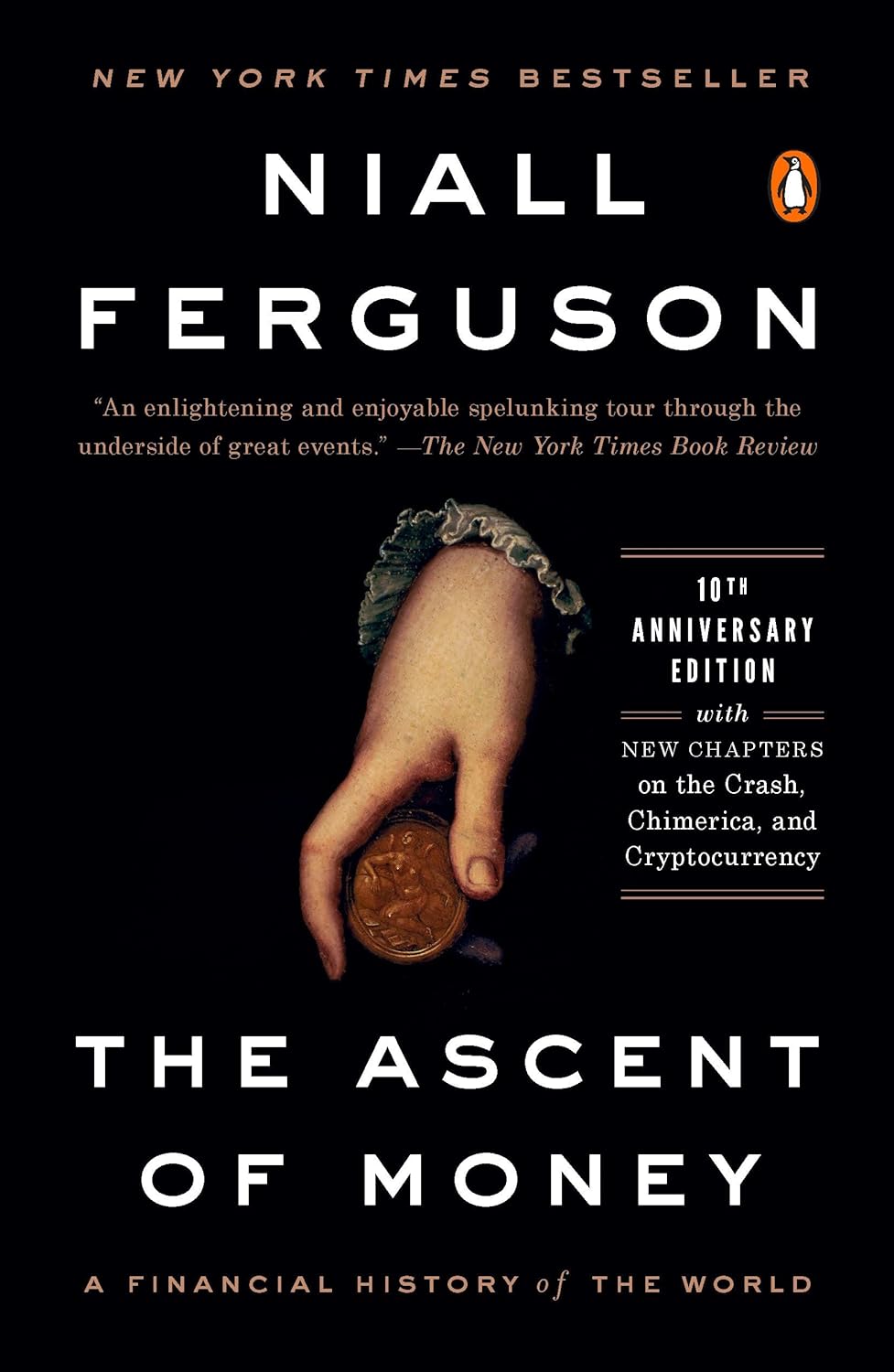
Niall Ferguson
The Ascent of Money reframes world history as fundamentally a story about finance. Ferguson demonstrates that major historical turning points—economic booms, revolutions, wars, and crises—are inseparable from financial innovation and the behavior of money. By connecting familiar historical events to their financial roots, he shows how currency exchanges, bond markets, stock bubbles, and credit systems have shaped empires, nations, and the distribution of global power. The updated edition connects these historical patterns to contemporary events, showing how the same dynamics that created past crises continue to shape our world today through trade wars, cryptocurrency disruption, and the shifting global order.
This book is essential for anyone interested in history, economics, finance, or geopolitics who wants to understand the hidden financial forces shaping world events. It's valuable for investors and financial professionals seeking historical perspective on market behavior and cycles. It's perfect for readers who appreciate Ferguson's accessible yet intellectually rigorous approach to complex topics. It's also ideal for those trying to make sense of current events—trade wars, cryptocurrency, populist movements, and shifts in global power—by understanding their historical precedents. If you want to see how money, not armies or ideologies, has been the true engine of civilization, this book is revelatory.
Niall Ferguson is one of the world's most renowned historians. He is the author of Paper and Iron, The House of Rothschild, The Pity of War, The Cash Nexus, Empire, Colossus, The War of the World, The Ascent of Money, High Financier, Civilization, The Great Degeneration, Kissinger, 1923-1968: The Idealist, and The Square and the Tower. He is Senior Fellow at the Hoover Institution, Stanford University, and a Visiting Professor at Tsinghua University, Beijing. His many awards include the Benjamin Franklin Prize for Public Service (2010), the Hayek Prize for Lifetime Achievement (2012) and the Ludwig Erhard Prize for Economic Journalism (2013)

By
Keith Ferrazzi
Never Eat Alone is built on a radical premise: your network is your net worth, and success comes to those who master the art of generosity-based relationships. Ferrazzi outlines timeless strategies used by history's most connected figures—from Winston Churchill to Bill Clinton to the Dalai Lama—and translates them into actionable advice for modern professionals. The book teaches you how to reach out constantly without being needy, how to help others get what they want so they'll help you get what you want, how to handle rejection and get past gatekeepers, and how to use social media strategically to build meaningful connections. It's not about collecting business cards; it's about cultivating a genuine circle of people who want to help you succeed because you've helped them first. Watch my conversation with Keith on Open Book.
This book is essential for anyone serious about career advancement, entrepreneurship, or personal success. It's valuable for introverts who think they can't network, professionals feeling stuck in their career who need to expand their circle, business owners trying to grow through relationships, and anyone intimidated by traditional networking events. It's perfect for those entering the job market or changing careers who need to understand how connections drive opportunity. If you want to move beyond transactional networking and build a genuine, reciprocal network that opens doors throughout your life, this book is foundational—as essential today as How to Win Friends and Influence People was in its era.
Keith Ferrazzi is an entrepreneur and global thought leader in high-performing teams and Chairman of Ferrazzi Greenlight and its Research Institute. He is the author of the numerous #1 New York Times bestselling books, a frequent contributor to Harvard Business Review, the Wall Street Journal, Fast Company, Forbes, Inc, Fortune, and other publications.
By
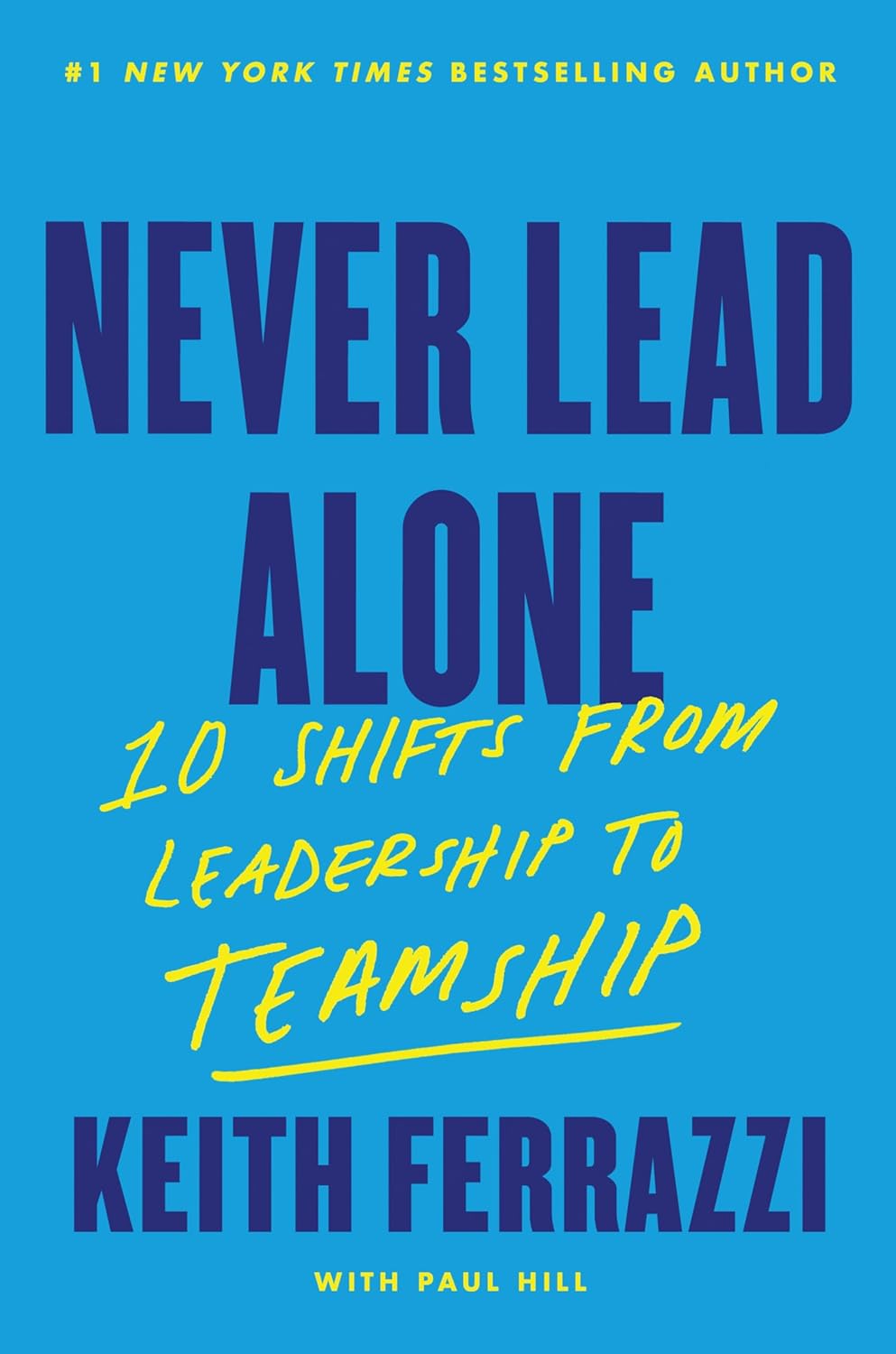
Keith Ferrazzi
Never Lead Alone redefines what modern teams need to succeed in today's volatile, decentralized business environment. Ferrazzi argues that traditional top-down leadership is insufficient; instead, high-performing organizations operate on "co-elevation"—where teammates commit to pushing one another higher in aligned pursuit of a shared mission. The book combines rigorous data with vivid case studies to show how the best teams establish a high-performance, high-integrity social contract, implement peer accountability systems, build personal trust, give shared feedback, develop team resilience, and adopt agile collaborative practices and tools. It's a practical roadmap for transforming how teams work together, leveraging both human collaboration and modern technology like AI to achieve exponential results. Watch my conversation with Keith on Open Book.
This book is essential for anyone working in a team environment—from individual contributors to C-suite executives. It's valuable for leaders struggling with traditional hierarchical models that limit innovation and agility. It's perfect for organizations trying to adapt to fast-paced, decentralized business environments where siloed decision-making is a liability. If you want to move beyond the myth that one leader can drive organizational success and instead build a team where everyone elevates everyone else, this book is indispensable.
Keith Ferrazzi is an entrepreneur and global thought leader in high-performing teams and Chairman of Ferrazzi Greenlight and its Research Institute. He is the author of the numerous #1 New York Times bestselling books, a frequent contributor to Harvard Business Review, the Wall Street Journal, Fast Company, Forbes, Inc, Fortune, and other publications.
By
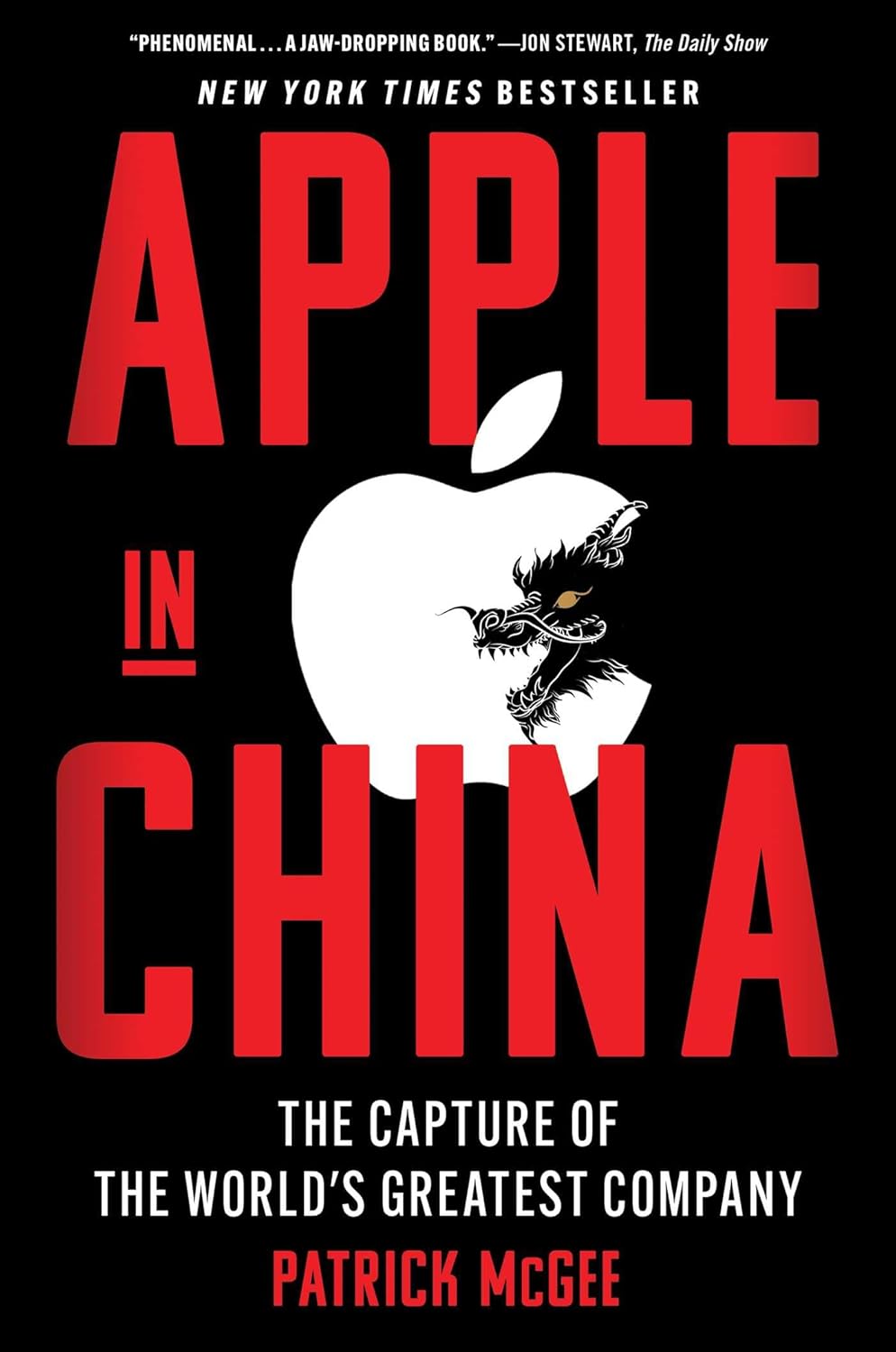
Patrick McGee
Apple in China is a meticulously researched investigation into one of the 21st century's most consequential corporate decisions and its unintended geopolitical consequences. McGee weaves together the stories of instrumental but overlooked figures—including the Mormon missionary who opened the first Apple Store in China, the "Gang of Eight" executives managing Beijing relations, and an idealistic veteran trying to improve factory worker conditions—to show how corporate ambition collided with authoritarianism. The book reveals internal tensions between operational demands and ethical concerns, showing how a company that once celebrated nonconformity gradually became entangled with and dependent upon a regime antithetical to its stated values. It's a cautionary tale about the dangers of prioritizing supply chain efficiency and profit over geopolitical awareness and corporate principles. Watch my conversation with Patrick on Open Book.
This book is for anyone working in a team environment, from individual contributors to executives, seeking to move beyond traditional hierarchies toward genuine collective success.
Patrick McGee was the Financial Times’s principal Apple reporter from 2019 to 2023, during which time he won a San Francisco Press Club Award for his coverage. He joined the newspaper in 2013, in Hong Kong, before reporting from Germany and California. Previously, he was a bond reporter at TheWall Street Journal. He has a master’s degree in global diplomacy from SOAS, University of London, and a degree in religious studies from the University of Toronto.
By
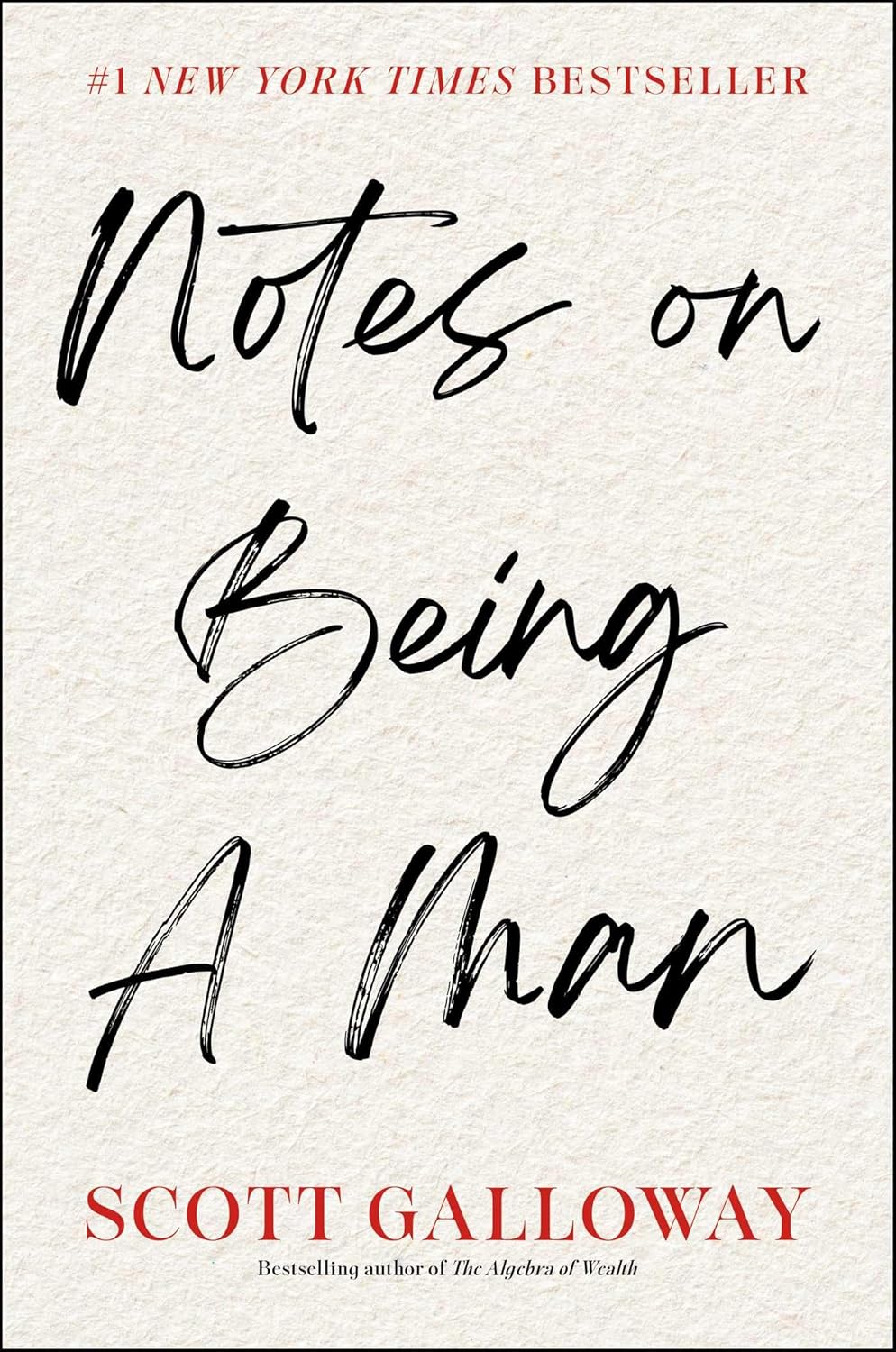
Scott Galloway
A candid exploration of modern masculinity that combines personal memoir with practical wisdom, offering concrete principles for building resilience, purpose, and meaningful relationships rather than falling into destructive patterns.
Men navigating modern life, parents of boys seeking guidance, and anyone interested in understanding the crisis facing young men and how to build healthier versions of masculinity.
Scott Galloway is a professor of marketing at NYU’s Stern School of Business and a serial entrepreneur. He was named one of the world’s best business professors by Poets&Quants. Scott has founded nine companies, including Prophet, RedEnvelope, L2, and Section, where he also teaches. He is the New York Times bestselling author of The Four, The Algebra of Happiness, Post Corona, Adrift, and The Algebra of Wealth. Scott has served on the boards of directors of the New York Times Company, Urban Outfitters, Berkeley’s Haas School of Business, Panera Bread, and Ledger. He has won multiple Webby and best podcast awards, and his books have been translated into twenty-eight languages. Across his Prof G Pod, Prof G Markets, and Pivot podcasts, his No Mercy/No Malice newsletter, and his YouTube channel, Scott reaches millions.
By
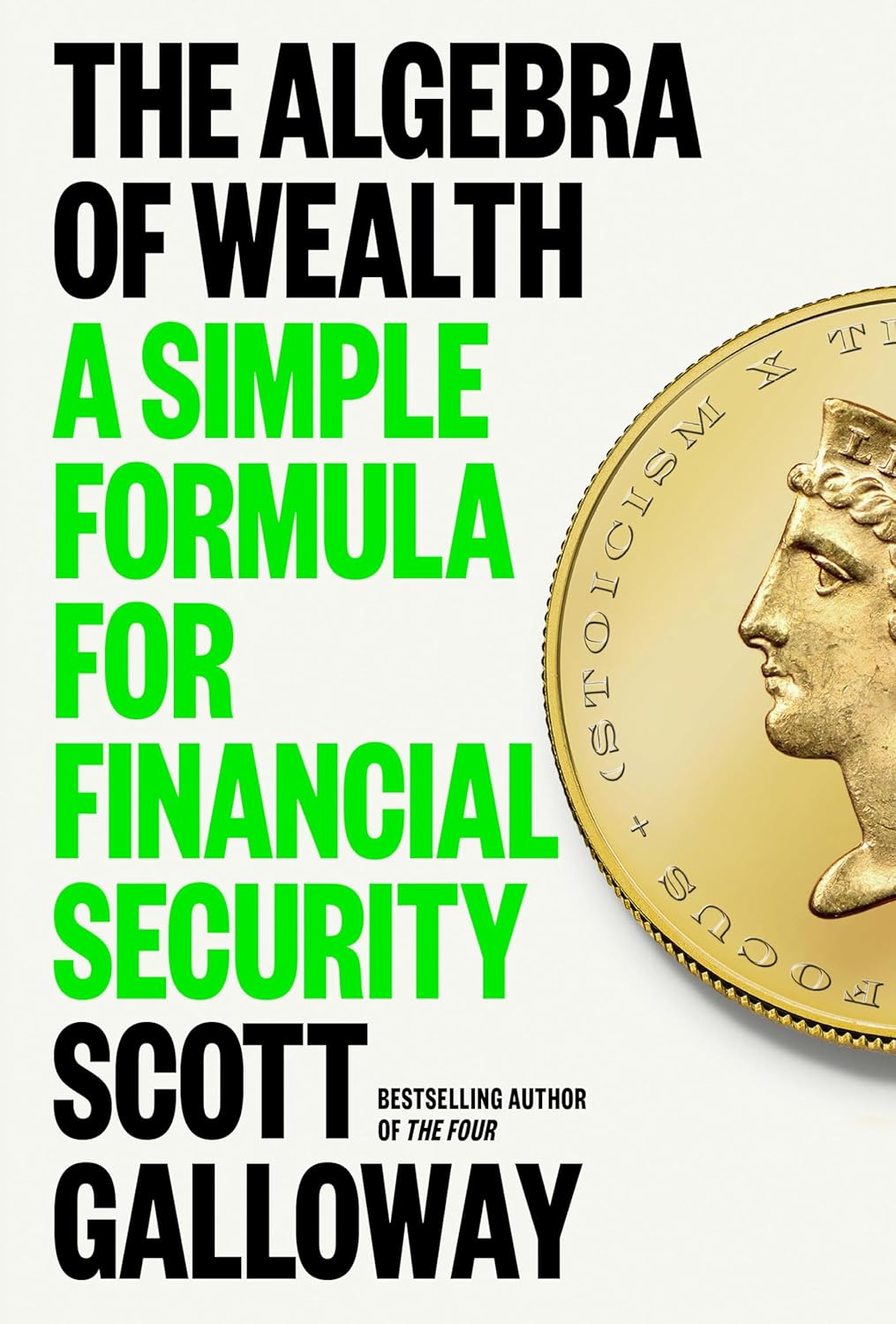
Scott Galloway
A no-BS framework for financial success in today's economy that combines practical wisdom with hard truths about how to position yourself for security despite unprecedented economic challenges.
Workers at any stage of their career seeking a modern financial strategy, anyone questioning traditional career and retirement advice, and those wanting practical steps to build economic resilience.
Scott Galloway is a professor of marketing at NYU’s Stern School of Business and a serial entrepreneur. He was named one of the world’s best business professors by Poets&Quants. Scott has founded nine companies, including Prophet, RedEnvelope, L2, and Section, where he also teaches. He is the New York Times bestselling author of The Four, The Algebra of Happiness, Post Corona, Adrift, and The Algebra of Wealth. Scott has served on the boards of directors of the New York Times Company, Urban Outfitters, Berkeley’s Haas School of Business, Panera Bread, and Ledger. He has won multiple Webby and best podcast awards, and his books have been translated into twenty-eight languages. Across his Prof G Pod, Prof G Markets, and Pivot podcasts, his No Mercy/No Malice newsletter, and his YouTube channel, Scott reaches millions.
By
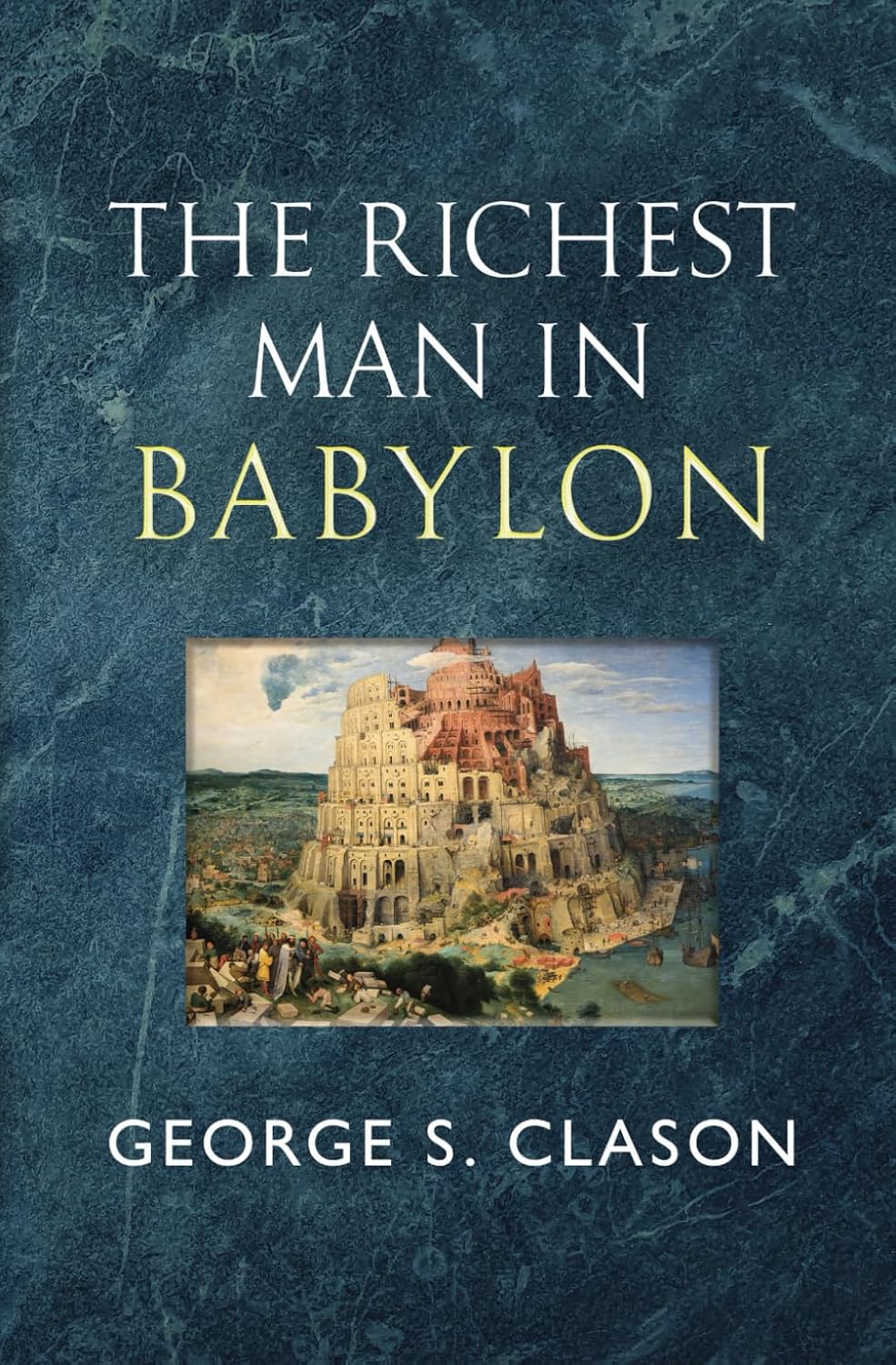
George S. Clason
A collection of parables demonstrating that financial security comes not from luck or inheritance, but from consistently applying timeless, simple laws of money that have worked for thousands of years.
People ask me what book actually matters when it comes to money, and I always come back to The Richest Man in Babylon. It isn’t about being clever or chasing the next big thing—it’s about discipline. The core lesson, pay yourself first, is so simple it almost sounds trivial, but I followed it from my early 20s onward, skimming a piece off every paycheck and investing it, whether times were good or bad. That habit mattered more than any single trade or career break. The book cuts through fantasy and hype and lays out timeless truths: live below your means, protect your capital, invest patiently, and let compounding do the work. These ideas worked thousands of years ago and they still work today. If you actually do what this book says, you don’t need to be a genius or perfectly timed market moves—just consistency and humility. Financial freedom isn’t a moment or a windfall, it’s a behavior repeated over time, and this book teaches that better than anything else I’ve ever read.
George Samuel Clason was born in Louisiana, Missouri, on November 7th, 1874. He attended the University of Nebraska and served in the United States Army during the Spanish-American War. A successful businessman, he founded the Clason Map Company of Denver, Colorado and published the first road atlas of the United States and Canada. In 1926, he issued the first of a famous series of pamphlets on thrift and financial success, using parables set in ancient Babylon to make each of his points. These were distributed in large quantities by banks and insurance companies and became familiar to millions, the most famous being The Richest Man in Babylon the parable from which the present volume takes its title.
By
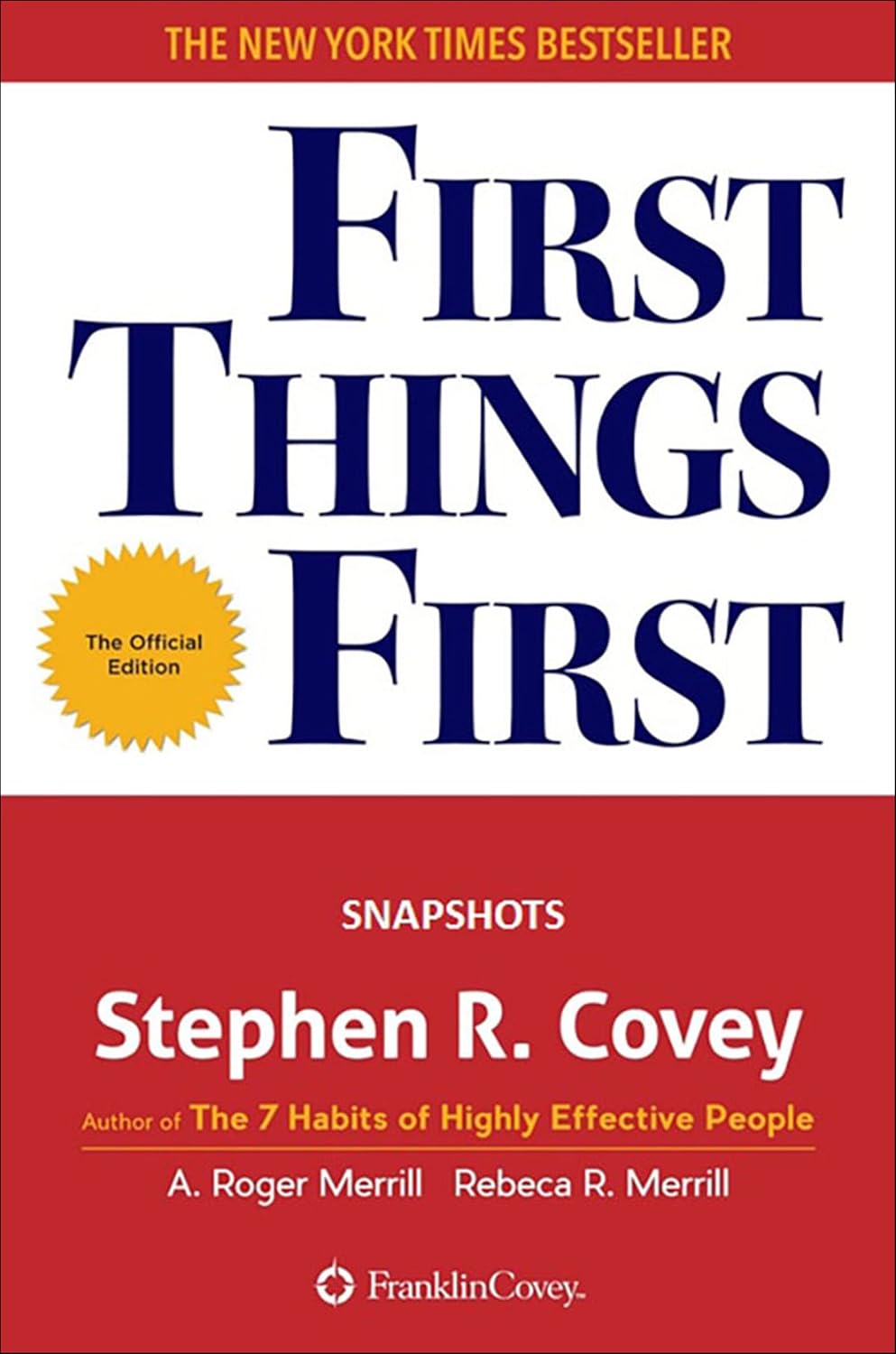
Stephen R. Covey
This is framework for organizing your life around principles rather than urgency, enabling you to accomplish more while building meaningful relationships and achieving inner peace and balance.
Anyone overwhelmed by competing demands, those seeking more than productivity tips and wanting genuine life balance, and readers who value principle-centered living over tactical efficiency.
Stephen R. Covey is a renowned leadership authority, family expert, teacher, organizational consultant, and co-founder of FranklinCovey Co. He is author of several international bestsellers, including The 7 Habits of Highly Effective People, which has sold over 20 million copies. He was named one of TIME Magazine's 25 Most Influential Americans.
By
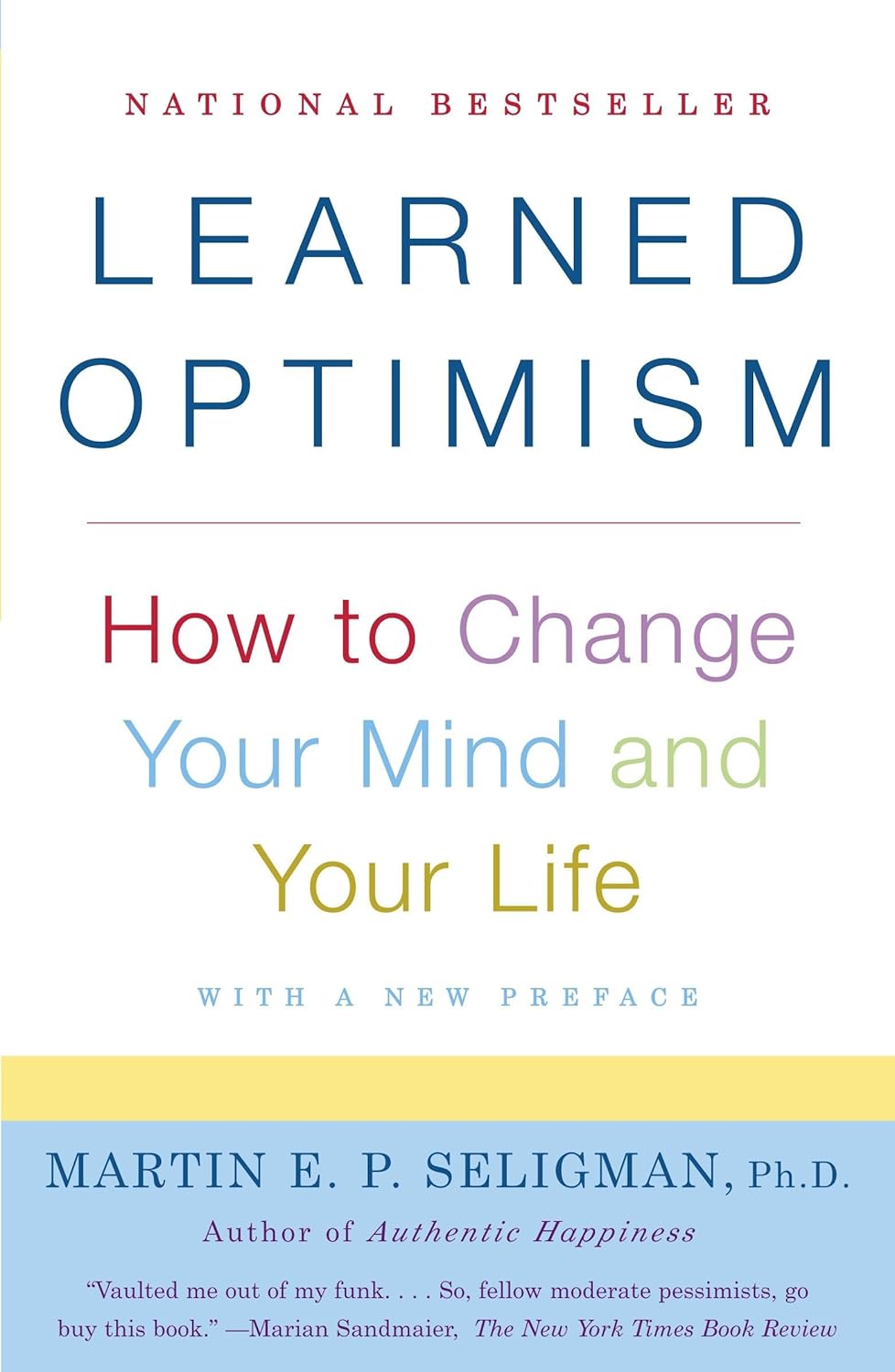
Martin E. P. Seligman
A scientifically-grounded guide showing that optimism isn't innate but learned, offering concrete exercises to rewire how you respond to adversity and build lasting resilience.
Anyone struggling with pessimism or learned helplessness, parents wanting to raise optimistic children, educators seeking to foster resilience in students, and those interested in practical psychology.
Martin E. P. Seligman is a professor of psychology at the University of Pennsylvania and a past president of the American Psychological Association, is a leading motivational expert and an authority on learned helplessness. His many books include Authentic Happinessand The Optimistic Child. Dr. Seligman's research has been supported by the National Institute of Mental Health, the National Institute on Aging, the National Science Foundation, the MacArthur Foundation, and the Guggenheim Foundation.
By
Napoleon Hill
A foundational success philosophy that combines practical techniques for wealth accumulation with deeper lessons about what constitutes genuine prosperity and lasting fulfillment.
Anyone seeking to understand the principles behind success and wealth, those wanting practical steps to achieve their ambitions, and readers interested in timeless personal development philosophy.
Napoleon Hill was born in 1883 in Virginia and died in 1970 after a long and successful career as a lecturer, an author, and as a consultant to business leaders. Think and Grow Rich is the all-time bestseller in its field, having sold 15 million copies worldwide, and sets the standard for today’s motivational thinking.
By
Dale Carnegie
A foundational guide to human psychology and interpersonal skills, showing how to build authentic connections, communicate effectively, and achieve success through genuine interest in others rather than manipulation.
Anyone seeking to improve their relationships and communication skills, professionals wanting to influence and lead others effectively, and readers interested in timeless principles of human interaction and success.
Dale Carnegie, known as 'the arch-priest of the art of making friends', pioneered the development of personal business skills, self-confidence and motivational techniques. His books - most notably How to Win Friends and Influence People - have sold tens of millions worldwide and, even in today's changing climate, they remain as popular as ever.
By
Philip Van Doren Stern
A timeless story exploring the profound impact one person's life has on others, revealing how small gestures and individual existence matter more than we realize.
Fans of It's a Wonderful Life, anyone who loves Christmas stories and the spirit of the season, and readers seeking meaningful, uplifting tales about human connection and purpose.
Philip Van Doren Stern was an American author, editor, and Civil War historian whose story, “The Greatest Gift,” became the basis of the classic Christmas film, It’s a Wonderful Life.
By
Robert Caro
An unprecedented examination of how political power actually operates in America, told through the extraordinary biography of a man who transcended democratic constraints to reshape an entire city and the lives of millions.
Anyone interested in urban history, politics, power dynamics, and how cities are shaped; essential reading for understanding how influence operates outside formal democratic structures.
Robert Caro is an American journalist and author known for his celebrated biographies of United States political figures Robert Moses and Lyndon B. Johnson.
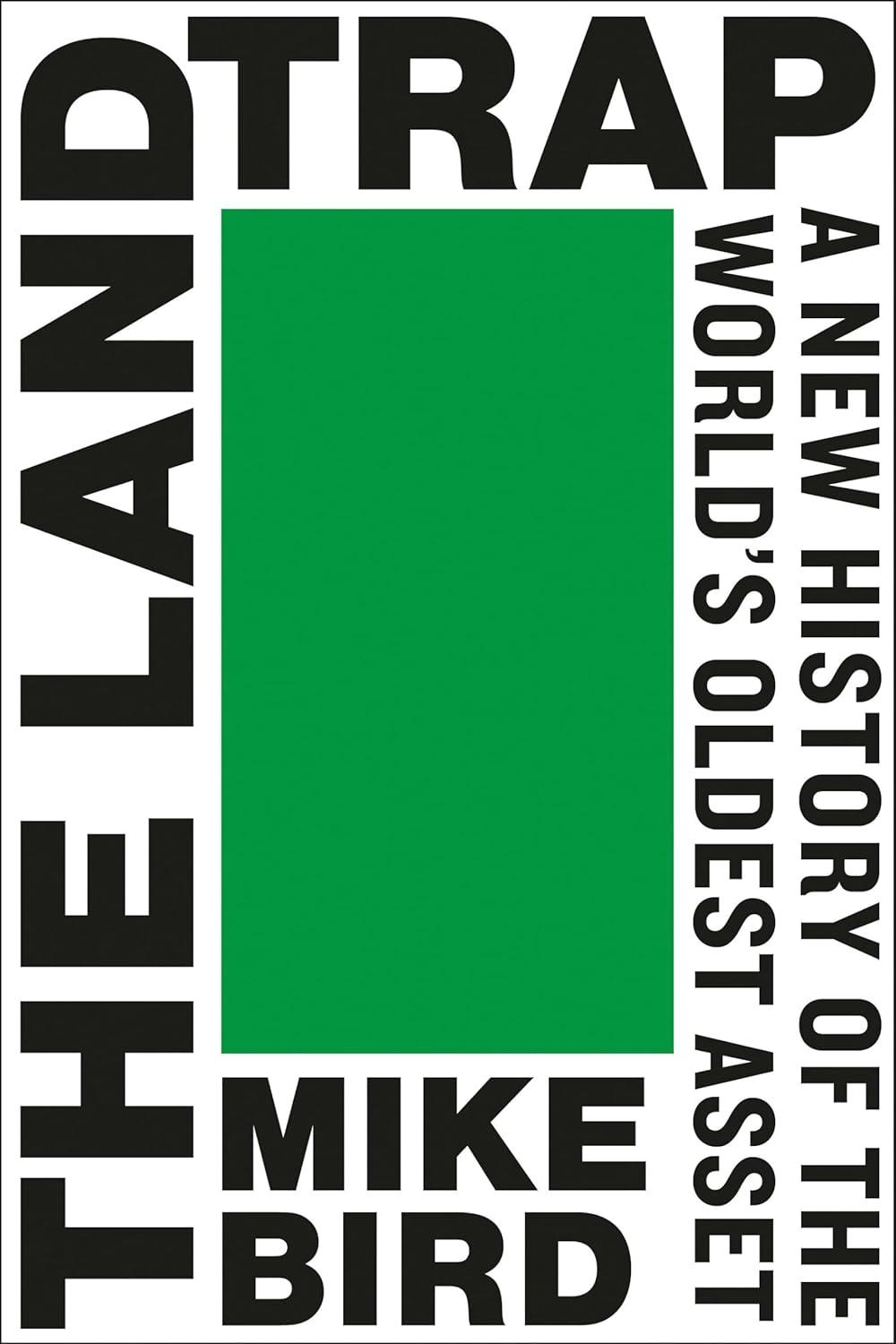
By
Mike Bird
A revelatory exploration of how land became the linchpin of the global banking system and a hidden driver of inequality, geopolitical tensions, and financial crises. Wall Street editor Mike Bird traces three centuries of history to show how fortunes are built on land appreciation rather than innovation, and how governments weaponize property policy to shape society. The Land Trap reveals the hidden mechanics beneath markets and money—the real foundation of modern power and wealth. Watch Mike Bird's appearance on Open Book.
Anyone interested in economics, real estate, wealth inequality, and geopolitics. Essential for policymakers, investors, and finance professionals who need to understand why land—not innovation—has become the primary driver of unmerited wealth and systemic financial risk. Perfect for anyone who owns property, pays taxes, or wants to understand how governments actually wield power.
Mike Bird is the Wall Street editor for The Economist, leading coverage of topics across the American financial industry and contributing to coverage of finance globally. He also cohosts the financial podcast Money Talks. Previously, he was a financial columnist and market reporter at The Wall Street Journal. Bird studied history and politics at the University of Exeter in the UK.
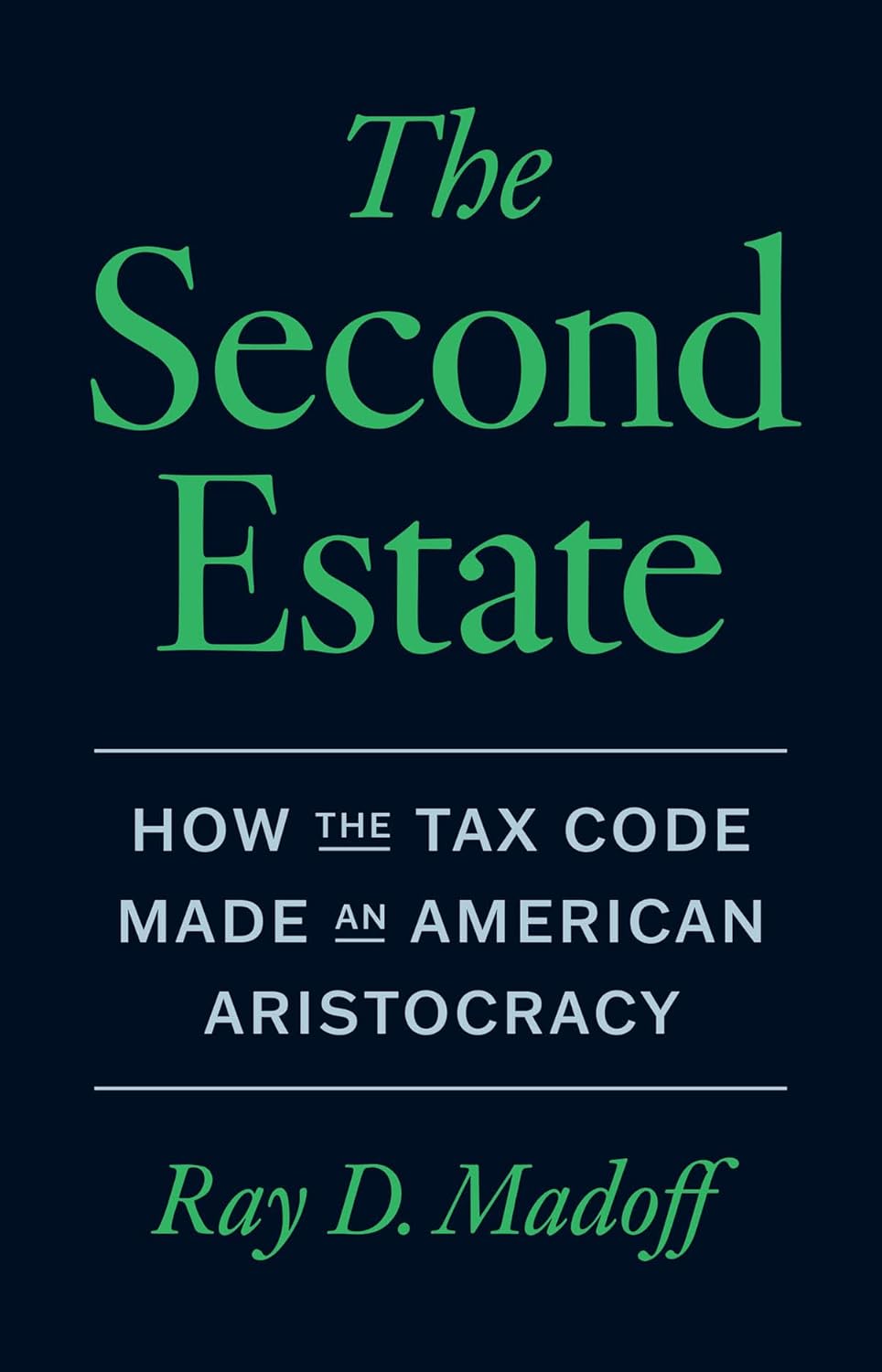
By
Ray D. Madoff
A searing investigation into how America's tax code has quietly transformed into an instrument of aristocracy. Legal scholar Ray D. Madoff exposes the tax avoidance playbook wealthy Americans use legally: avoiding salaries, never selling appreciating assets, and borrowing against wealth tax-free. What's shocking isn't that the rich hide money offshore—it's that the tax code itself, designed over a century ago to tax the wealthy, now explicitly writes them out of the system. The Second Estate reveals how the richest Americans have removed themselves from taxation entirely while ordinary workers bear the burden.
Anyone concerned about wealth inequality, fairness, and how democracy actually works. Essential for voters, policymakers, and citizens who want to understand why the tax system favors the ultra-wealthy. Perfect for anyone who pays taxes and wonders why the richest pay nothing—and how a system designed to prevent aristocracy became one instead.
Ray D. Madoff is a professor at Boston College Law School and the cofounder and director of the Boston College Forum on Philanthropy and the Public Good. She is the author of Immortality and the Law: The Rising Power of the American Dead and lead author of The Practical Guide to Estate Planning. Her writing has appeared in The New York Times, The Wall Street Journal, The Washington Post, and The New York Review of Books, among other outlets.
.jpg)
By
George Kikvadze
And Then You Win is an insider account of Bitcoin's transformative decade, told by George Kikvadze, who witnessed the cryptocurrency's evolution from a fringe concept to a global financial movement. Drawing on firsthand experiences and interviews with Bitcoin pioneers, venture capitalists, regulators, and other key players, the book chronicles how Bitcoin survived ridicule, regulatory battles, and fierce opposition to fundamentally reshape the world of finance and trust. Beyond the technical and financial details, Kikvadze reveals the strategic thinking, perseverance, and unconventional leadership required to champion a revolutionary idea when the entire establishment was arrayed against it. Watch my conversation with George and investing legend Bill Tai on Open Book.
This book is for entrepreneurs, innovators, and anyone interested in understanding how transformative movements emerge against overwhelming odds. It's essential reading for tech founders and business leaders who want to learn how to lead through chaos, maintain focus under pressure, and navigate hostile regulatory environments. The book also appeals to Bitcoin enthusiasts and cryptocurrency investors seeking the untold stories behind the movement's rise, as well as to anyone curious about the psychology of disruption—how visionary thinking, grit, and relentless determination can triumph when conventional wisdom says you should fail.
George Kikvadze is the Founder of Cryptic8 VC, investing at the intersection of technology and longevity. He is also Vice Chairman and an early backer of Bitfury Group, the company at the heart of this book. A Bitcoin pioneer since 2013, he was privileged to be behind three tech unicorns - Bitfury, Cipher Mining, and Hut 8 - with a combined value exceeding $12 billion.


